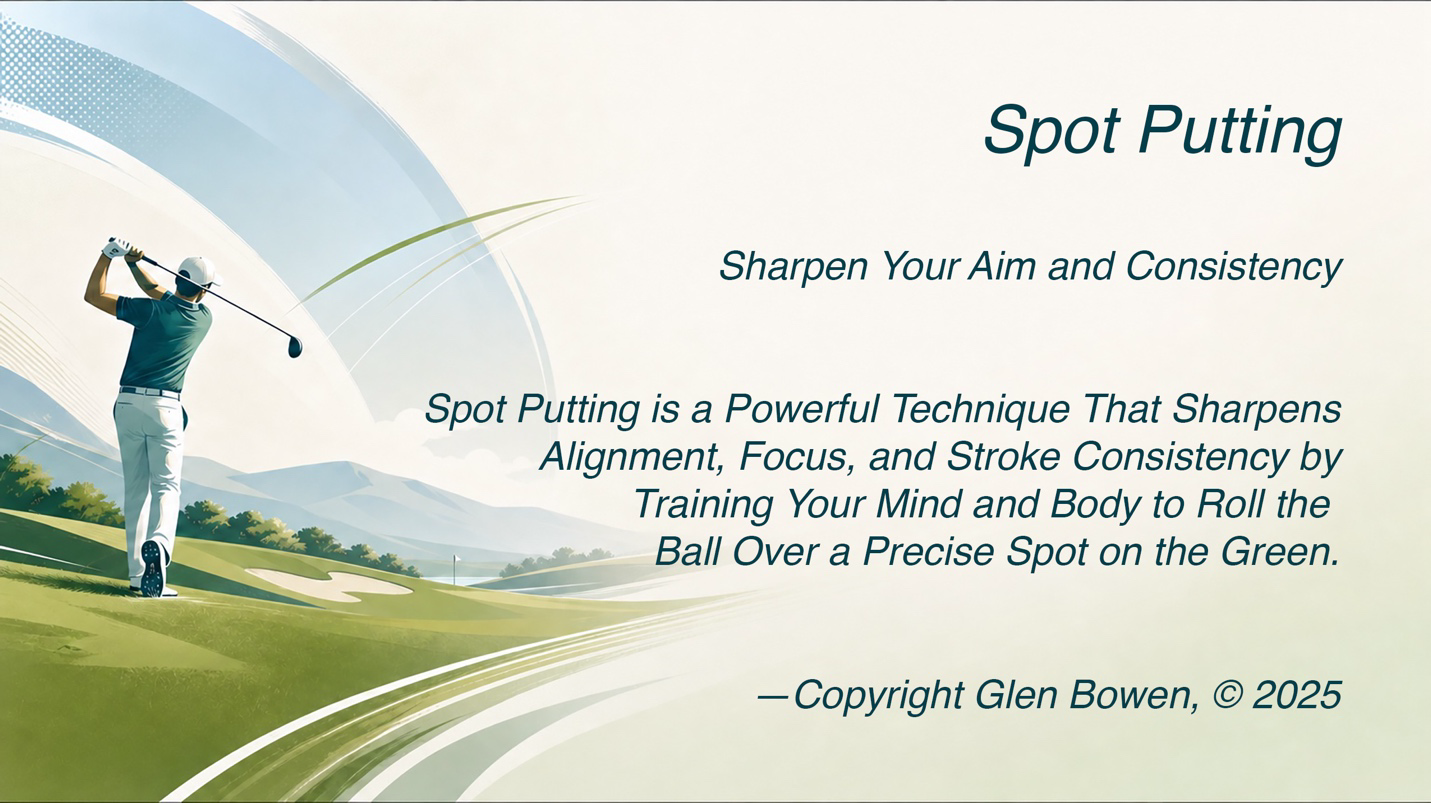
Spot Putting
$2.50
Purchase this article to continue reading.
Description
Spot putting is a technique used by some of the world’s best putters to improve alignment, consistency, and accuracy on the greens. The method centers on focusing your stroke to roll the ball over a specific spot about 12 to 18 inches in front of the ball. This focus helps golfers lock in proper alignment, visualize the putt more clearly, and enhance overall putting performance.
Key Steps in Spot Putting
1. Read the Green
Before choosing a spot, carefully study the green’s slope and breaks. Understanding how the ball will curve and where it needs to start rolling is essential for effective spot putting.
2. Find the Apex
Identify the furthest point outside the hole where the ball begins to turn in a different direction. This apex acts as a key reference for your putt’s starting line.
3. Select Your Spot
Pick a distinct spot 12–18 inches ahead of the ball that aligns with your intended line and encourages a smooth roll toward the hole. This could be a patch of discolored grass, a small mark, or any other visible feature.
4. Align Your Putter Face
Instead of focusing on your feet or lower body alignment, concentrate on squaring your putter face, forearms, and shoulders to the chosen spot. This focused alignment supports a more consistent stroke.
5. Visualize and Execute
Use practice swings to feel the stroke and picture the ball rolling over the spot toward the cup. Keeping your attention fixed on this intermediary target improves accuracy and fluidity in your putting stroke.
Practice Drills for Spot Putting
- Marker Drill: Place tees or small markers on the green 12–18 inches in front of your ball during practice. Focus on rolling the ball directly over the marker to build precision.
- Gate Drill: Set two tees just wider than your putter head and try to roll the ball through the “gate” and over your chosen spot without hitting the tees.
- Distance Adjustment Drill: Practice placing your spot closer or farther based on putt length to develop feel and control for different distances.
Common Mistakes to Avoid
- Over-Fixating on the Spot: While focus is key, staring too rigidly can cause tension and disrupt your natural stroke rhythm. Keep your stroke smooth and relaxed.
- Ignoring Green Reading: Spot putting isn’t a substitute for reading the break; it complements it. Make sure you’ve assessed the green’s contours before selecting your spot.
- Neglecting Overall Alignment: While the putter face is crucial, check that your body alignment supports the stroke line to avoid compensations.
Integrating Spot Putting with Other Techniques
Spot putting works well alongside classic line visualization and the “aim small, miss small” approach. Use spot putting for pinpoint accuracy on short to mid-range putts, and combine it with broader line reading for longer putts. Experiment to find the balance that fits your style.
Adjusting Spot Distance for Different Putts
- Short Putts (3–6 feet): Place your spot closer (around 12 inches) to focus on precision and feel.
- Medium Putts (6–15 feet): 15–18 inches works well to balance visualization and stroke rhythm.
- Long Putts: Consider using spot putting as a reference for your starting line, but rely more on your overall read and pace control.
Pro Insights: Jack Nicklaus and Beyond
Jack Nicklaus, while preferring to visualize the entire line, acknowledges spot putting’s value on short putts and when pinpoint accuracy is needed. Other professionals, including Jordan Spieth and Matt Kuchar, have also spoken about focusing on intermediate targets to improve alignment and confidence on the greens.
In Summary
Spot putting is a simple yet powerful technique that sharpens alignment, focus, and stroke consistency by training your mind and body to roll the ball over a precise spot on the green. With dedicated practice and mindful integration, golfers can improve their accuracy and confidence, leading to more putts made and lower scores.
— Copyright Glen Bowen, © 2025
Reviews
There are no reviews yet.