The Golf Grip
$2.50
Purchase this article to continue reading.
Description
The grip is the foundation of every golf swing. It’s the only physical connection between you and the club, so getting it right is crucial. A proper grip helps you hit the ball longer and more accurately, and it’s especially important for finesse shots around the green, where a softer, more sensitive touch is needed.
Learning the Proper Grip
Mastering the grip isn’t difficult, but it requires practice until it becomes second nature. New golfers can expect to feel comfortable with the grip within two to three weeks of daily practice, even without hitting balls. Visiting the range during this time will speed up the adjustment. For experienced players switching to a better grip, it may take longer since they first need to unlearn old habits.
How to Grip the Club (Right-Handed Players)
- Left Hand: Place the handle diagonally across the fingers where they meet the palm. Curl the fingers around the handle, keeping the thumb resting on top, pressing the club against the thumb pad.
- Right Hand: Slide your right hand onto the handle so its lifeline covers the left thumb. Curl the fingers around, with the right pinky overlapping the space between the left pinky and ring finger. The hands should oppose each other on the grip.
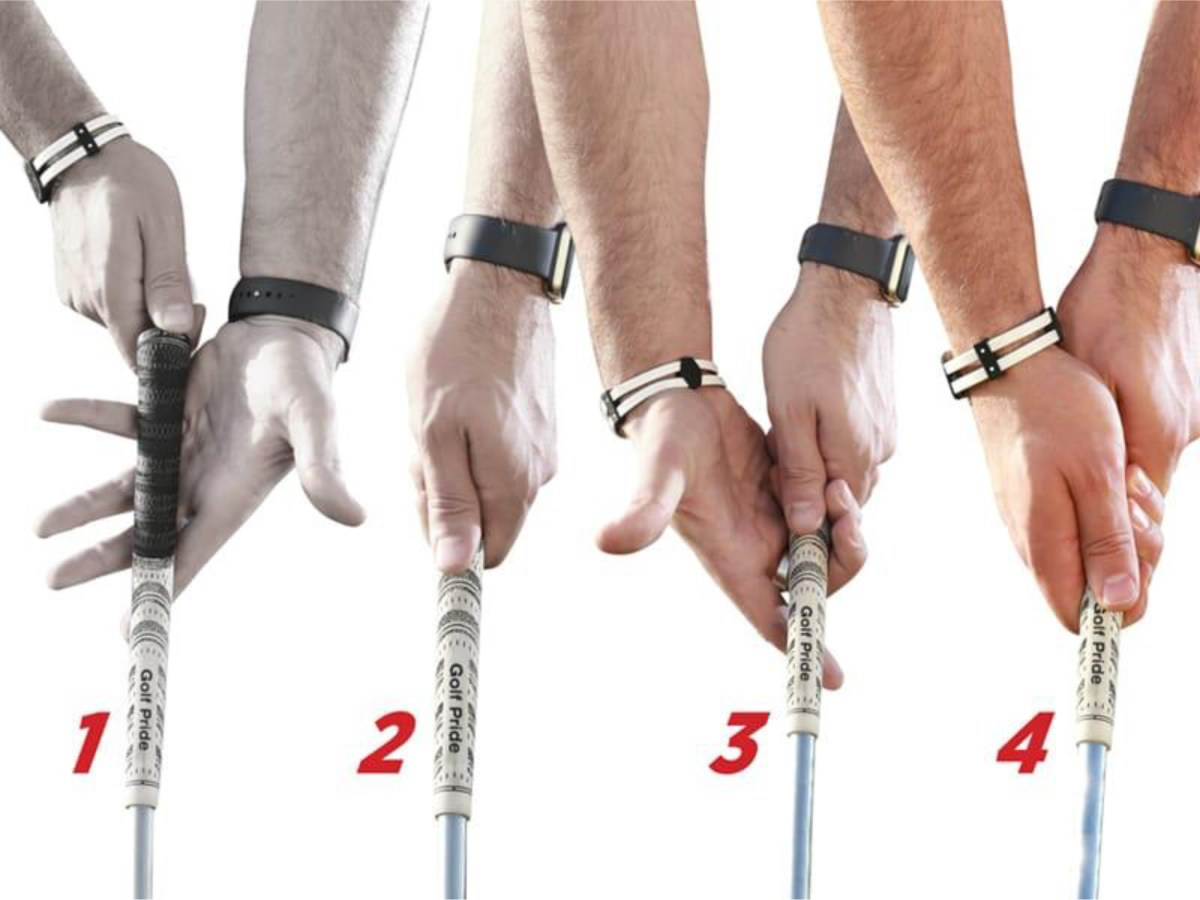
- Check: From above, you should see one or two knuckles on the left hand, and the right hand should grip the club on the opposite side, about 180 degrees from the left hand.
Common Grip Mistakes to Avoid
- Gripping Too Tight: Causes tension that restricts swing fluidity and leads to poor shots.
- Improper Thumb Placement: Thumbs too far on top or too far underneath can affect clubface control.
- Inconsistent Hand Position: Hands too far apart or misaligned reduces control and consistency.
- Overuse of Fingers vs. Palm: Relying too much on fingers or palms can alter grip pressure and feel.
Grip Strengths: Strong, Neutral & Weak
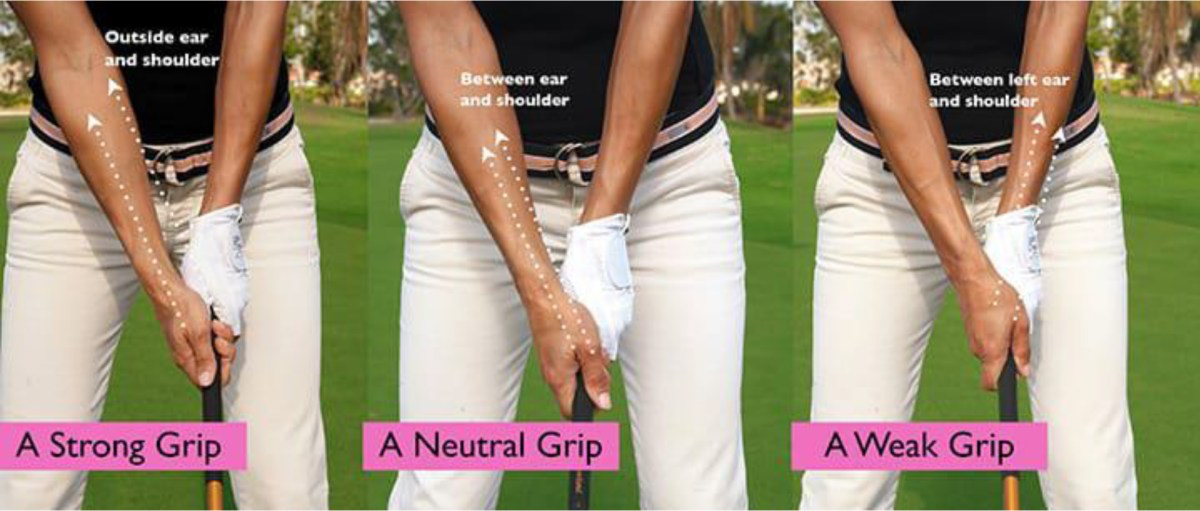
- Strong Grip: Rotated clockwise from neutral, showing 2–3 knuckles on the left hand. The “Vs” between thumb and forefinger point toward the right shoulder. This grip promotes a draw or hook but can make squaring the clubface harder and lead to over-rotation.
- Neutral Grip: The “Vs” point at the right ear. This grip offers consistency and serves as a solid foundation, making it easier to work the ball left or right.
- Weak Grip: Rotated counterclockwise from neutral, promoting a fade or slice. Favored for directional control, it sacrifices some power and is generally less recommended.
Grip Styles: Overlapping, Interlocking & Baseball
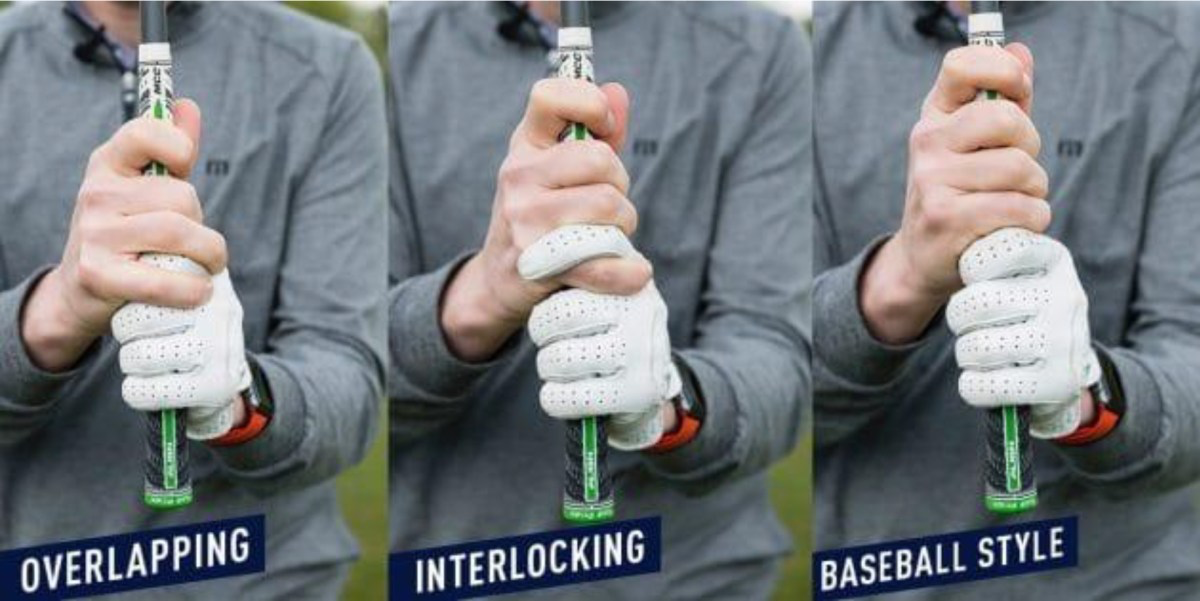
- Overlapping (Vardon) Grip: Most popular among pros and low-handicap players. The right pinky overlaps the left index finger. It allows more wrist hinge and can increase clubhead speed but works best for larger hands.
- Interlocking Grip: The right pinky interlocks with the left index finger, forming a solid unit. Favored by players with smaller or weaker hands, but may reduce clubhead speed and tactile feel.
- Baseball (10-Finger) Grip: All ten fingers grip the club without overlapping or interlocking. This grip can create more wrist hinge and speed but may make clubface control tougher.
Using Visual Aids to Check Your Grip
- Mirrors: Practice in front of a mirror to check hand positions and angles.
- Video: Record your grip and swing to analyze hand placement.
- Grip Trainers: Devices designed to help you feel the correct grip pressure and position.
Grip Pressure: Finding the Right Balance
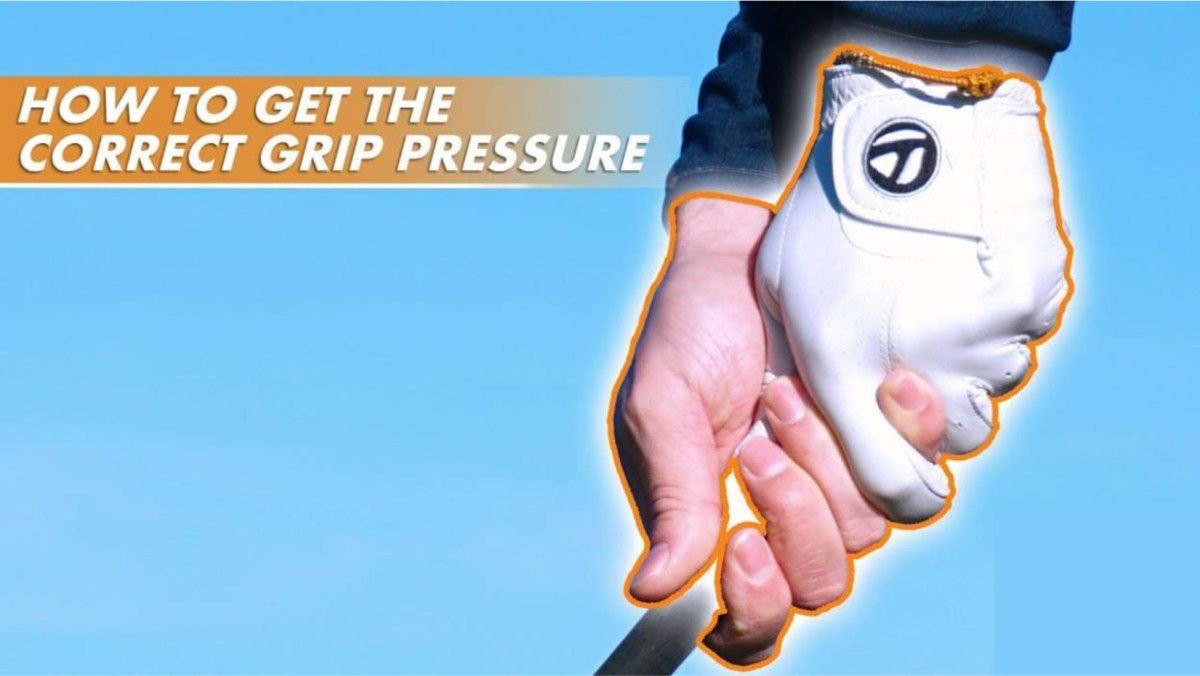
Many amateurs grip the club too tightly, causing tension that travels up the arms and ruins swing fluidity. Proper pressure varies by shot type:
- Too Light (1): Not recommended; grip may slip.
- Light (2–3): For delicate shots around the green.
- Moderate (3–4): Ideal for most full shots, including drives and irons.
- Firm (5–6): For buried lies and moderate rough.
- Strong (7–8): For thick rough or difficult shots requiring extra control.
- Too Tight (9–10): Creates tension and should be avoided.
Apply pressure mainly through the left little finger near the top of the grip and the right index and middle fingers for stability. Maintain consistent pressure throughout the swing, especially at the top, to avoid grip loosening and overswinging.
Adjusting Your Grip for Different Shots
- Fade Shots: Use a slightly weaker grip to encourage left-to-right ball flight.
- Draw Shots: Use a stronger grip to promote right-to-left spin.
- Flop and Soft Shots: Soften grip pressure for better feel and control around the green.
- Power Shots: Firm but not tight grip to maintain control without tension.
How Grip Affects Swing Path and Clubface Control
Your grip influences the clubface angle at impact and the swing path, which determines shot shape and direction. A strong grip tends to close the clubface, promoting draws and hooks. A weak grip opens the clubface, encouraging fades and slices. Neutral grip helps keep the clubface square for straighter shots.
Grip Maintenance Tips
- Replace grips regularly (about once a year or 40 rounds) to maintain tackiness and control.
- Clean grips periodically to remove dirt and oils that cause slippage.
- Choose grips that fit your hand size and playing style to maximize comfort and performance.
Experimentation and Consistency
Between three grip strengths, three grip styles, and multiple pressure levels, golfers have many ways to customize their grip. While experimentation is encouraged to find what feels best, staying within proven norms ensures stability and control.
Tweaking your grip can unlock more consistent, powerful shots. Remember, the key to success is simple: practice, practice, practice.
Copyright Glen Bowen, © 2025




Reviews
There are no reviews yet.